
Stories of Impact
Read about those who have been given the opportunity to reach their dreams and goals because of supporters like you.
Lasting Impact of Generosity
Sponsorship, scholarship spark a lifetime of growth and potential for Unbound alumna.
Sponsorship can sometimes feel like a passive activity. Despite the best of intentions, your sponsored child or elder may remain at the back of your mind until you receive a new letter or photo.
But in that instant, the communication reminds you of this very important relationship.
The words written in a letter between a sponsored friend and their sponsor, along with photos or in some instances videos, create an indelible impact.
These moments hold the potential to create ripple effects for the sponsored individual, their family and the community where they live.
Sponsorship is a gift that can take many forms. For Catherine Ruddy López Maldonado (Cathy to her friends and family), this took root in 1996 as she began her education at a Catholic school in Ecuador.
Read more
Sponsorship opened the door to her potential
At school, Cathy learned about the opportunity to participate in the sponsorship program.
Over time, she realized that sponsorship benefitted her entire family. For example, the funds helped Cathy’s stay-at-home mother, her father (a security guard), and her three siblings with household needs. Along with the purchase of shoes, school supplies, textbooks and other school-related items, the family could also use the sponsorship funds to buy food and other necessities.
In gratitude, Cathy, with assistance from her father, wrote letters to her sponsor. Each was lovingly decorated by Cathy with drawings and complemented by photographs showing her continued growth. With time, Cathy began to write her own messages.
Her parents also helped her to recognize the advantage of sponsorship and the opportunities it offered to escape poverty. Greater access to education and the ability to afford food became critical stepping stones to living a life of dignity.
“Each letter represented my gratitude to the sponsor, who, without knowing me beyond the photos, was concerned about my well-being,” Cathy said.
Throughout her sponsorship, Cathy participated in activities with Unbound. This included youth workshops and the opportunity to take computer and English classes, which became a foundation for the skills that continue to benefit her work and growth today. The program also fostered the development of social skills, helping Cathy overcome her shyness to face challenges with confidence and determination.
“Although I never had the opportunity to meet her in person,” Cathy said about her sponsor, “I will always carry her words and unconditional support in my heart. As a result, I’ve grown into someone who understands and supports others.”

Cathy calls Unbound the “helping hand” that changed the course of her life and helped her overcome poverty.
From scholarship to the career of her dreams
When Cathy’s time in the sponsorship program ended, she found another opportunity to become a part of the Unbound Scholarship Program while pursuing her university studies.
Through participation in the scholarship program, Cathy saw a different side of the sponsorship she once received.
“I understood the efforts and benefits behind tutoring, letter-writing workshops, Christmas and birthday celebrations. …,” she said. “Seeing the smiles from the families and the gratitude was an experience that always filled my heart.”
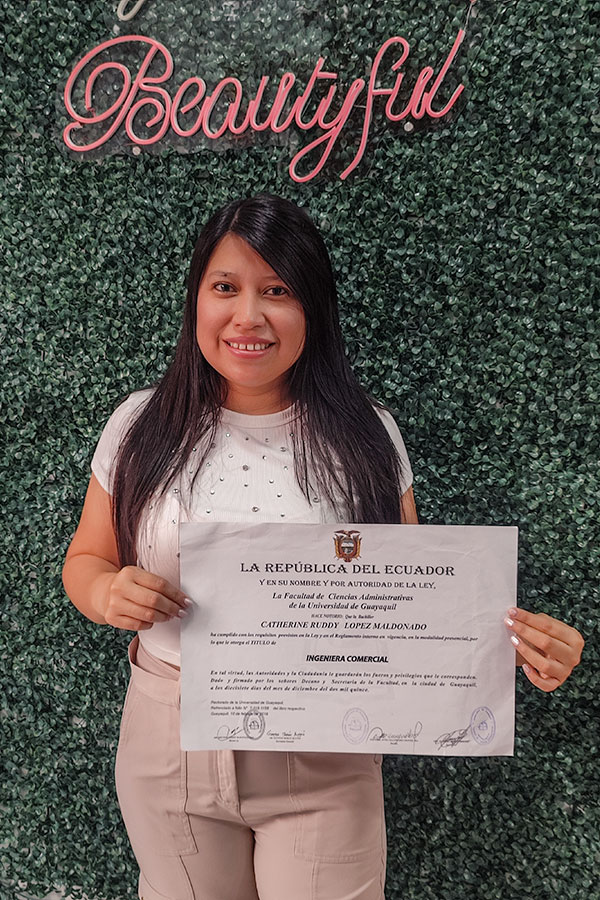
Participation in the scholarship program also allowed her to achieve a long-held dream of higher education, graduating from university with an emphasis in accounting. Post-graduation, Cathy accepted a job offer for a role in the accounting department of Unbound’s program in Ecuador and has been a part of the team for almost 10 years now.
“I had received so much and now I could give back by applying what I learned,” she said. “Being able to put those lessons into practice felt incredible. I carry with me everything that they taught me, and I try to pass those lessons on.”
Sponsorship and participation in the scholarship program gave Cathy and her family the tools they needed to overcome poverty.
Cathy’s professional career has given her the opportunity to help her parents and younger siblings financially when necessary and to make improvements to her childhood home. In addition, she has also been able to purchase her first home on her own.
The support of a scholarship allowed Cathy to experience what’s possible with continued effort and to become someone who understands the importance of sharing the gift of generosity with others.
“Unbound extended a helping hand to my family and me, and thanks to that help, we were able to move forward and reach our dreams.”
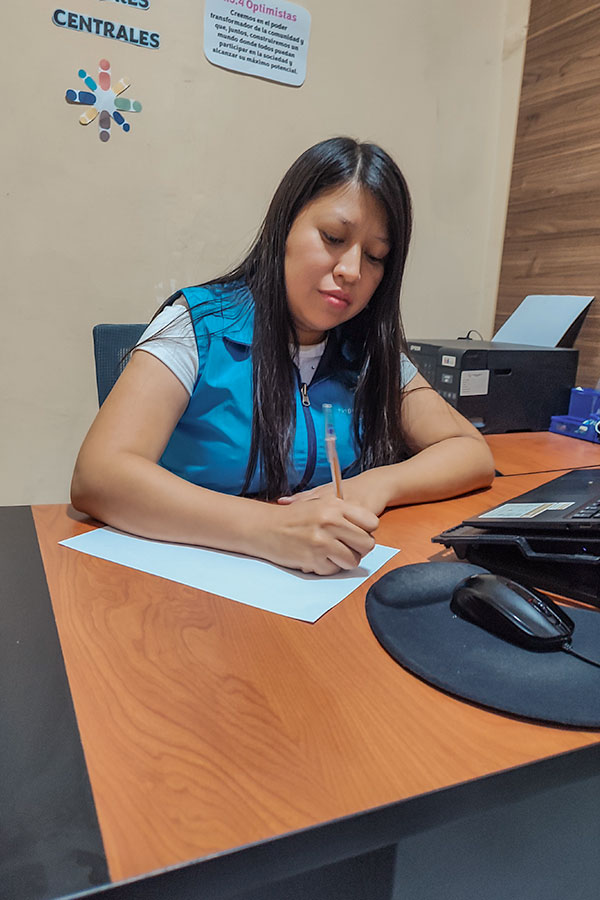
Cathy accepted a position in the accounting department of Unbound’s program in Ecuador. Over the course of almost 10 years, her career has allowed her to support herself financially, help her parents and purchase her first home.
I carry with me everything that [Unbound] taught me, and I try to pass those lessons on.
—Catherine Ruddy López Maldonado, Unbound alumna and current Ecuador staff member
Unbound Regional Reporter for Latin America Josué Sermeño contributed information and photos for this story.
Nancy’s Education Journey
Meet Nancy, a determined student in Guatemala who is overcoming financial barriers to pursue her dream of becoming an accountant. Through the Unbound Scholarship Program, she is not only securing a better future for her family but also giving back by volunteering with a local mothers’ group. Watch her story to see how access to education creates a ripple effect of leadership and service within a community.
When green is the color of safety
Natural disasters are part of life in the Philippines, with typhoons and tropical storms frequently causing severe flooding.
But for Rowena, a mother in Unbound’s Quezon program, it was the gentlest of rain showers that regularly brought her distress.
The aging roof of her one-room home leaked, soaking the space where her four children slept.
For 13 years, the family’s solution was to catch the rainwater in empty containers. With finances barely able to cover food and the children’s educations, they thought they had no choice but to live with the issue.
Read more
“I always tell my children to [value] their education because it’s the only treasure that I can provide for them,” Rowena said. “[But] it was painful for me to see that they were suffering when it rained because of our old roof.”
In 2022, the family took Unbound’s Goal Orientation powered by Poverty Stoplight survey and were encouraged to create a plan for overcoming obstacles created by poverty. At the forefront of Rowena’s mind was her children’s futures.
She knew they needed a better home — a safe, dry place where they could focus on their studies in comfort — and she committed to reaching a goal that she had once believed to be impossible.
A ‘vulnerable country’
Rowena’s family’s lives have been molded by natural disasters.
The family’s one-level home was flooded during a typhoon. With help from the Unbound Critical Needs Fund, they replaced their food and other damaged necessities while cleaning up their home after the knee-deep, muddy floodwaters receded.
But, in a country that sees about 20 tropical storms annually, it likely won’t be the last time Rowena’s family faces such a dire setback. In 2025 alone, there have already been 21 typhoons, with two catastrophic typhoons impacting over 3,200 families in Unbound’s programs in the Philippines.
In 2024, the World Risk Index ranked the Philippines as the country most at risk for natural disasters. With over 17.5 million Filipinos living below the poverty line, the majority lack the resources to prepare for or recover from the devastation caused by natural disasters like loss of shelter or livelihood.
Despite their home offering little defense against the elements, home improvements didn’t reach the top of Rowena’s priority list until the Poverty Stoplight survey helped her see just how much it was influencing her family’s ability to overcome poverty.
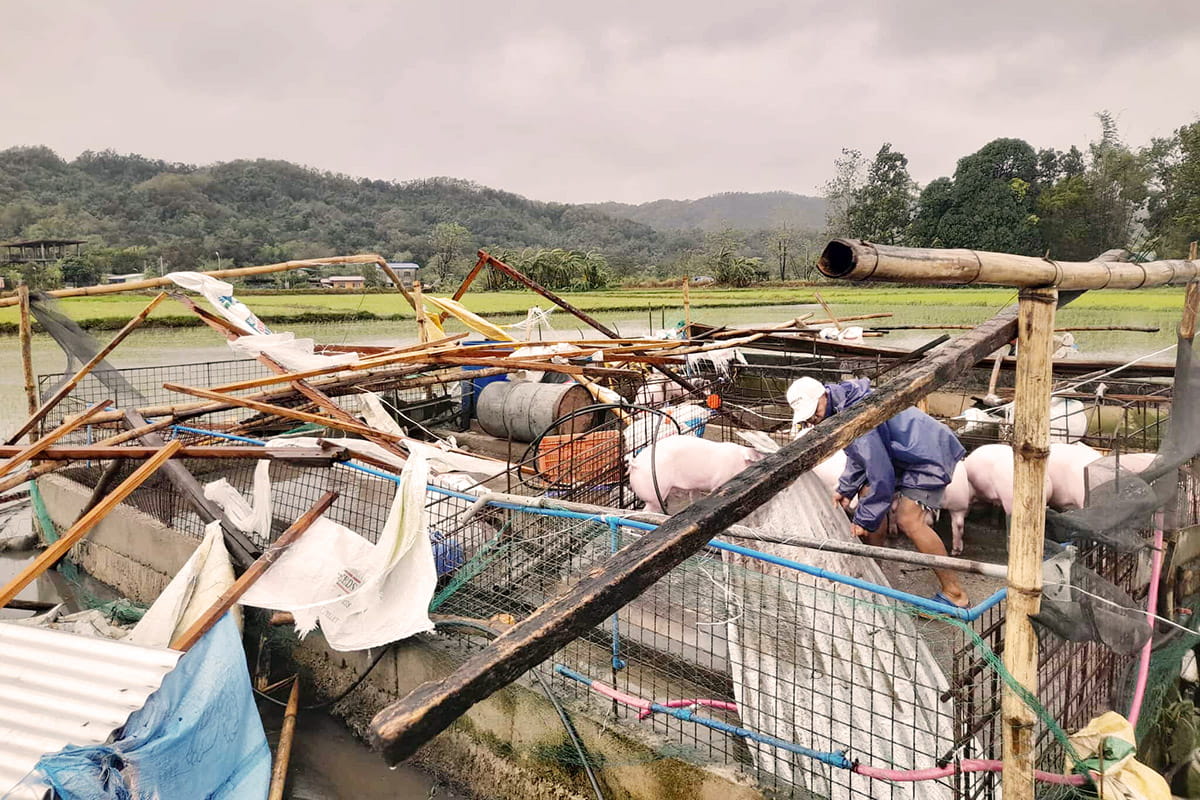
In early November, Super Typhoon Uwan destroyed homes and livelihoods in Quezon in the Philippines, impacting over 180 families served by Unbound.
Improving safety with Poverty Stoplight and the Critical Needs Fund
Poverty Stoplight is a mobile technology and social innovation tool — created by nonprofit Fundación Paraguaya — that helps families to clearly see their strengths and needs and to set goals for overcoming poverty.
In Unbound’s Quezon program, Rowena was guided through 54 poverty indicator images and questions organized under themes, and she marked each with a color she believed fit her family’s life reality — red to indicate extreme poverty, yellow to indicate poverty and green to indicate no poverty. Rowena’s survey results indicated her family was experiencing the most poverty under the theme “housing and infrastructure.”
Income from Rowena’s small convenience store and her husband Edsel’s job as a security officer were not enough to help the family begin their home improvements.
But Rowena was determined to find a way. She analyzed their needs and prioritized their goals, important skills she learned from the Unbound Quezon staff. Maria Salamanque, an Unbound Quezon social worker, said the staff guides families to be self-sufficient and to make decisions on their own.
“They know their needs,” Salamanque said. “By [entrusting them] to make the decisions, they become more empowered. We just provide them with knowledge and training — they are the ones who work at applying [the lessons] to their lives.”
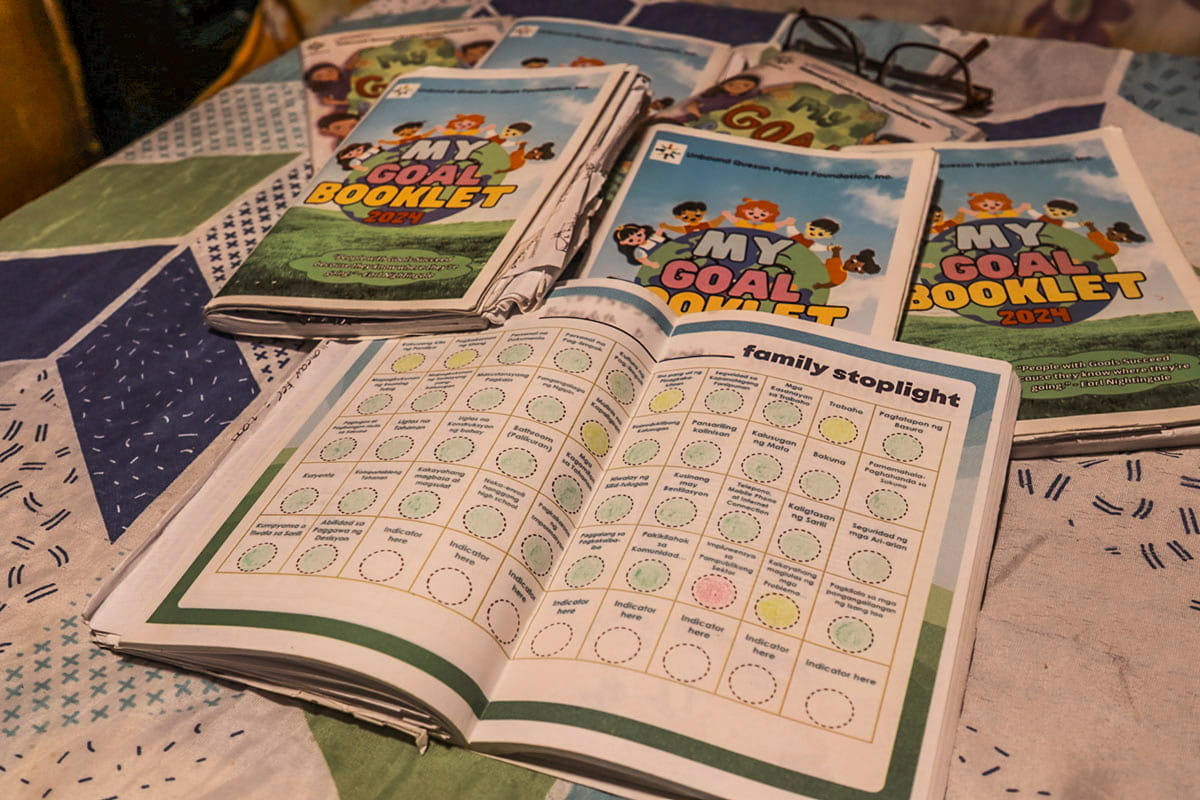
Over the last three years, families in Unbound’s Quezon program have moved 36,930 poverty indicators out of either red (extreme poverty) or yellow (poverty) statuses and into the green (no poverty) status using Poverty Stoplight. The ‘My Goal Booklet’ helps them keep track of their goals and progress from year to year.
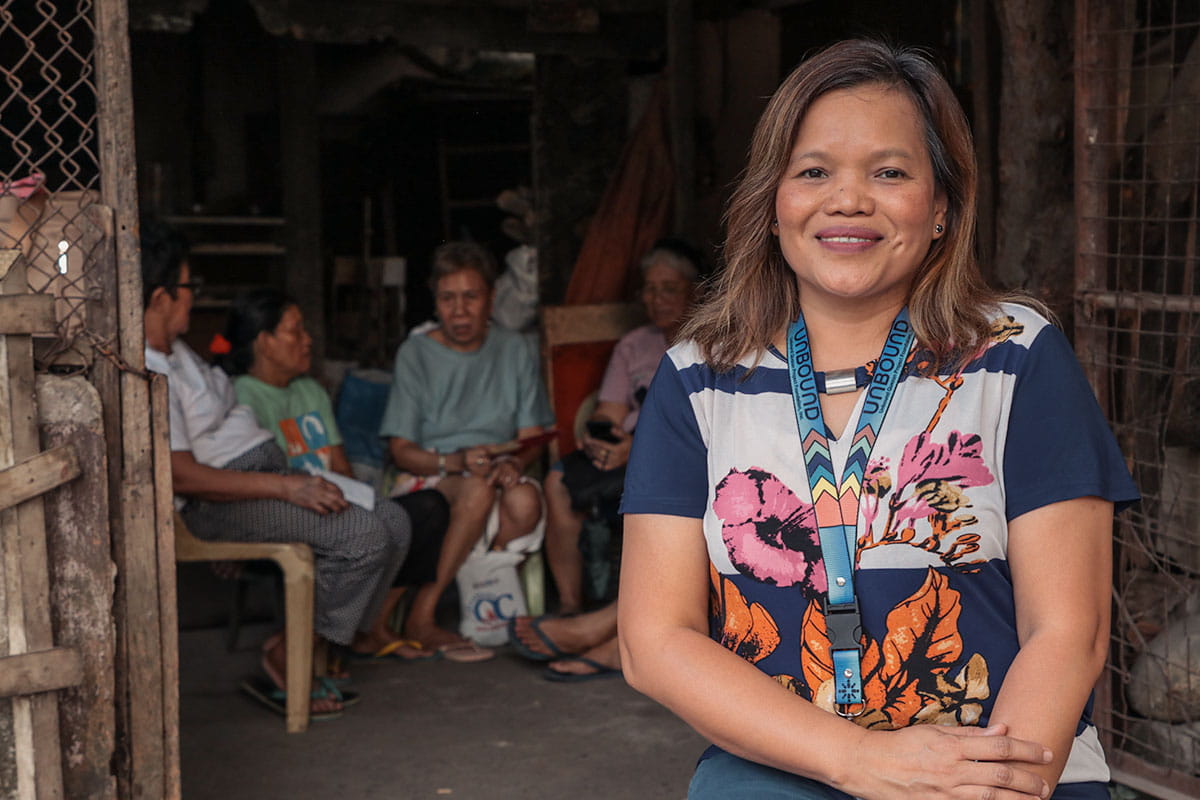
Unbound Quezon social worker Maria Salamanque and other staff work one-on-one with families each year to guide them through the Poverty Stoplight survey.
Rowena requested and received $268 from the Unbound Critical Needs Fund, a resource that families in the program can decide to utilize in certain situations to support them in their goals. The family combined the funds with a loan from Edsel’s workplace and capital from Rowena’s small store to jumpstart their renovations.
“Improving a house needs to have a big budget,” Rowena said. “But that would make our living better and more comfortable, so we did what we had to do.”
Over the course of a year, with friends to help with the construction, Rowena’s family moved most of their red and yellow poverty indicators under “housing and infrastructure” to green.
They expanded their home to a second level, adding three bedrooms. Before, the family’s kitchen, living room and bedroom were in one space on the first floor, and the children slept together on floormats. Adding a second level not only gave the children their own sleeping space but also ensured the family’s safety during floods.
In addition, the family replaced their old, leaky roof and updated the window of the home from bamboo to concrete and glass.
“It may not be beautiful … but our house now is better than what it was before,” Rowena said. “We can sleep restfully at night not worrying about leaks from our roof or the flooding. Our security and safety have improved.”
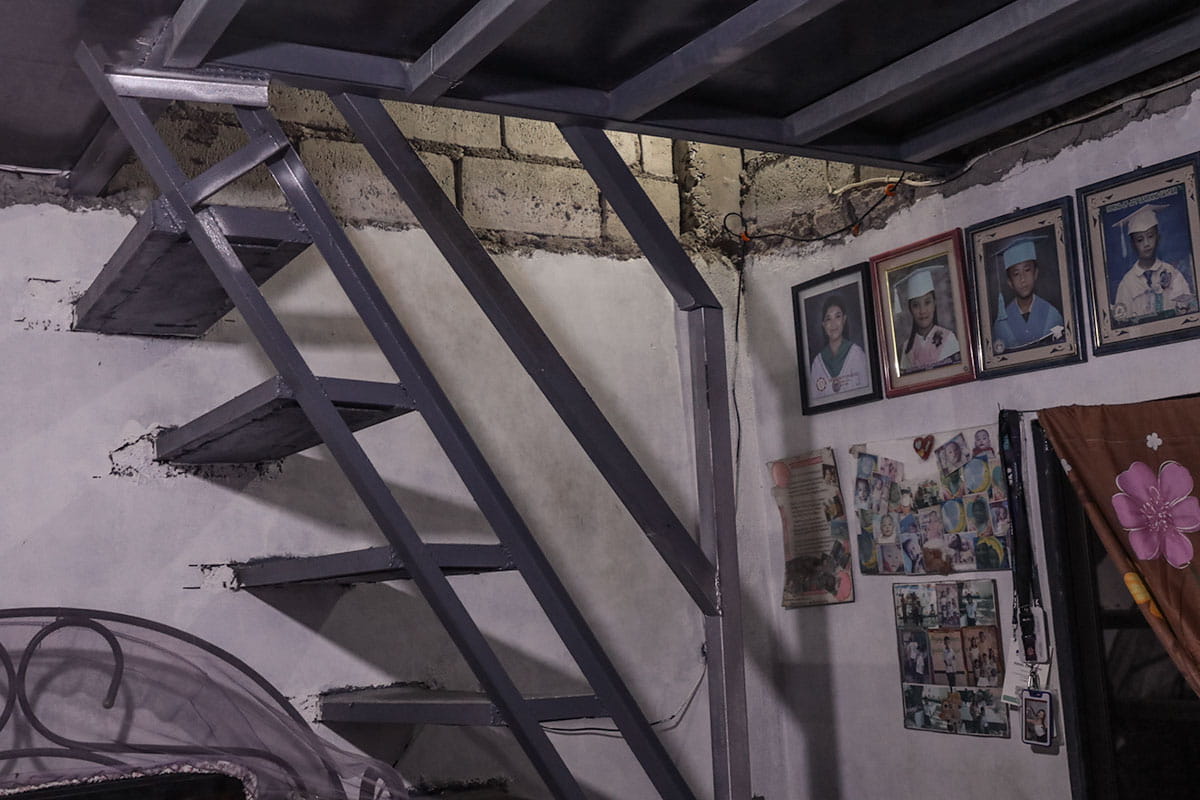
The concrete and iron stairs Rowena’s family installed lead up to the new second level of their home.
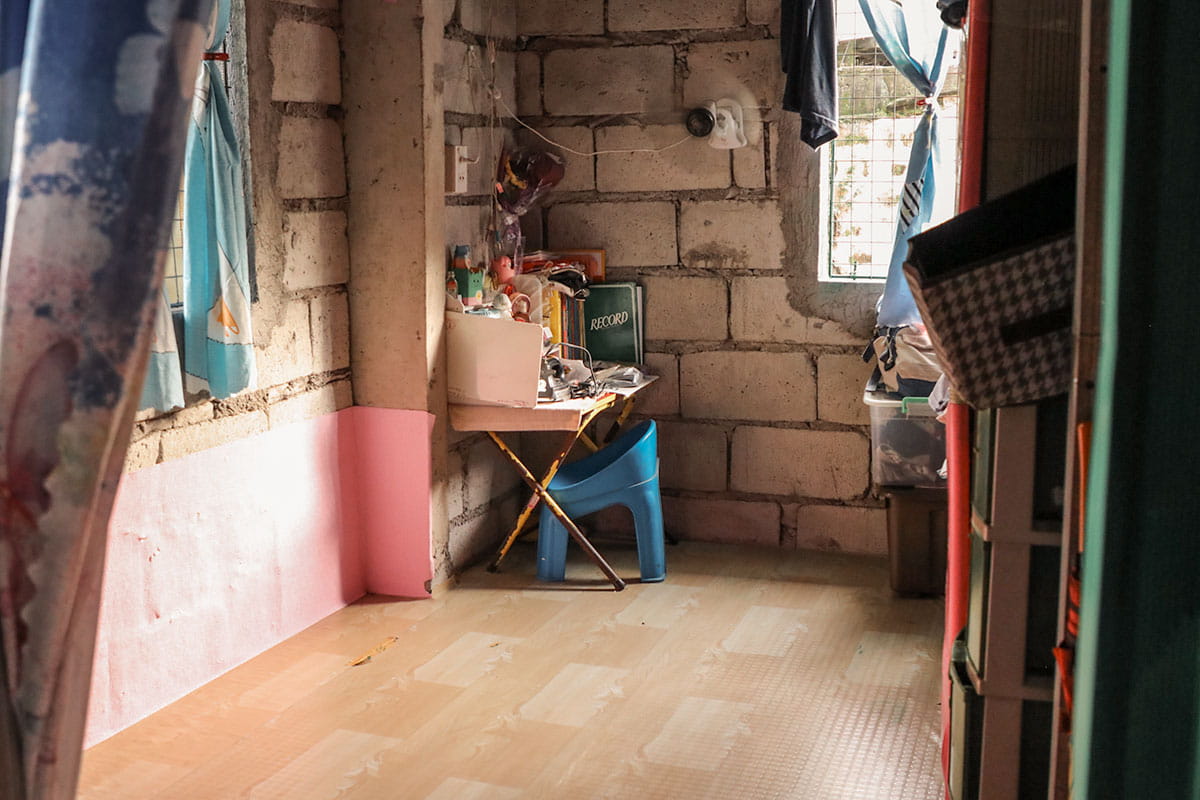 Now with their own bedroom on the second level, Rowena’s growing children have more space, and the family overall can be safer during times of flooding.
A future in green
Though the Philippines may always be a country caught in the “eye of the storm,” Rowena has cause to feel less stressed over her family’s safety and living situation these days. She can now set her focus on other goals — such as increasing her income and ensuring her children get the best education possible.
The family would like to make further improvements to their home, such as re-enforcing the walls and tiling the floors. But for now, the family is satisfied with the improvements.
“Unbound is the bridge to uplift our lives from poverty,” Rowena said. “I am very happy to see that we are moving forward for the betterment of our living. I can see the happiness in my children at having their own bedroom.”
When Rowena takes her follow-up Poverty Stoplight survey, she plans to set goals to increase the family income by working to expand her small convenience store. In her mind, there’s only one outcome that will be acceptable.
Determinedly she said, “That will be my “green” goal for the year.”
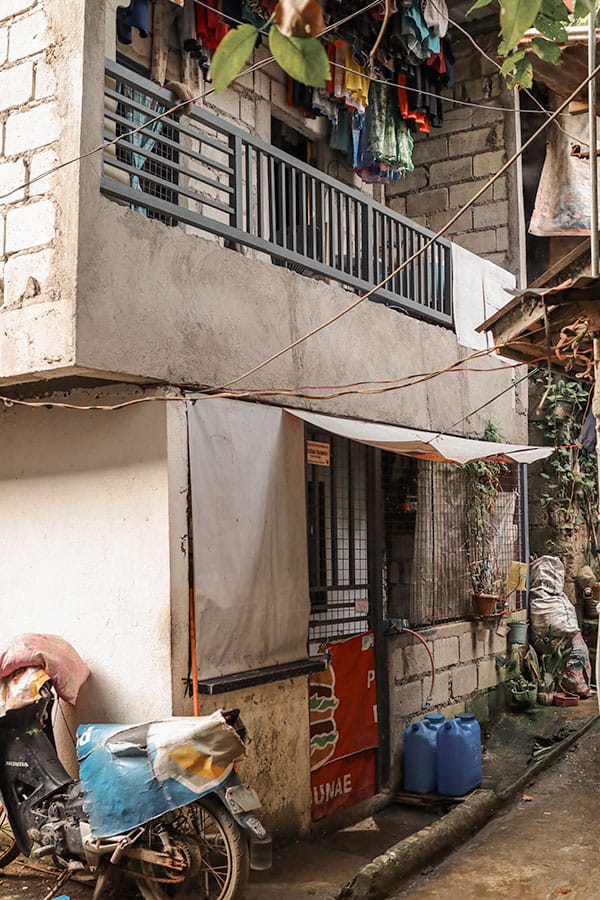
Rowena’s family’s home in Quezon following the addition of their second level.
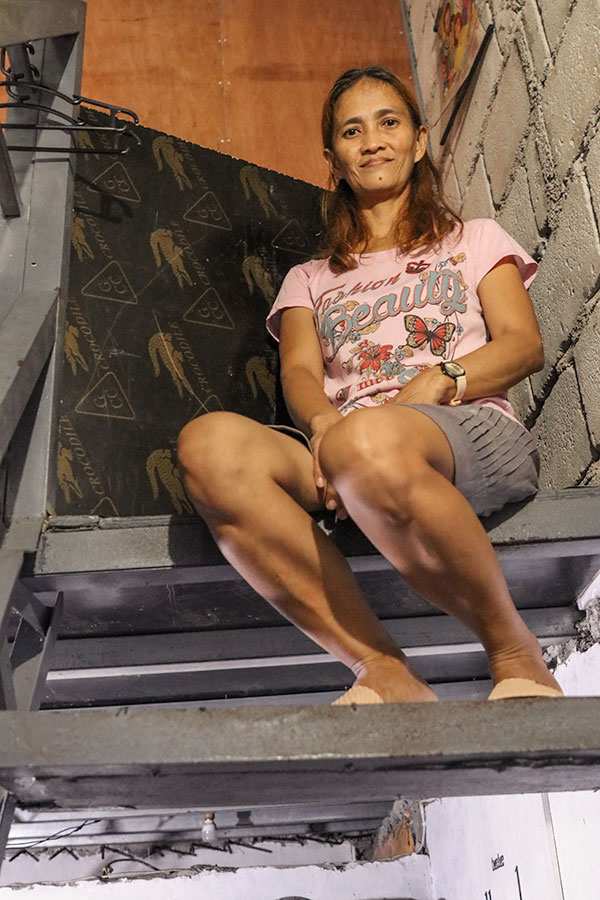
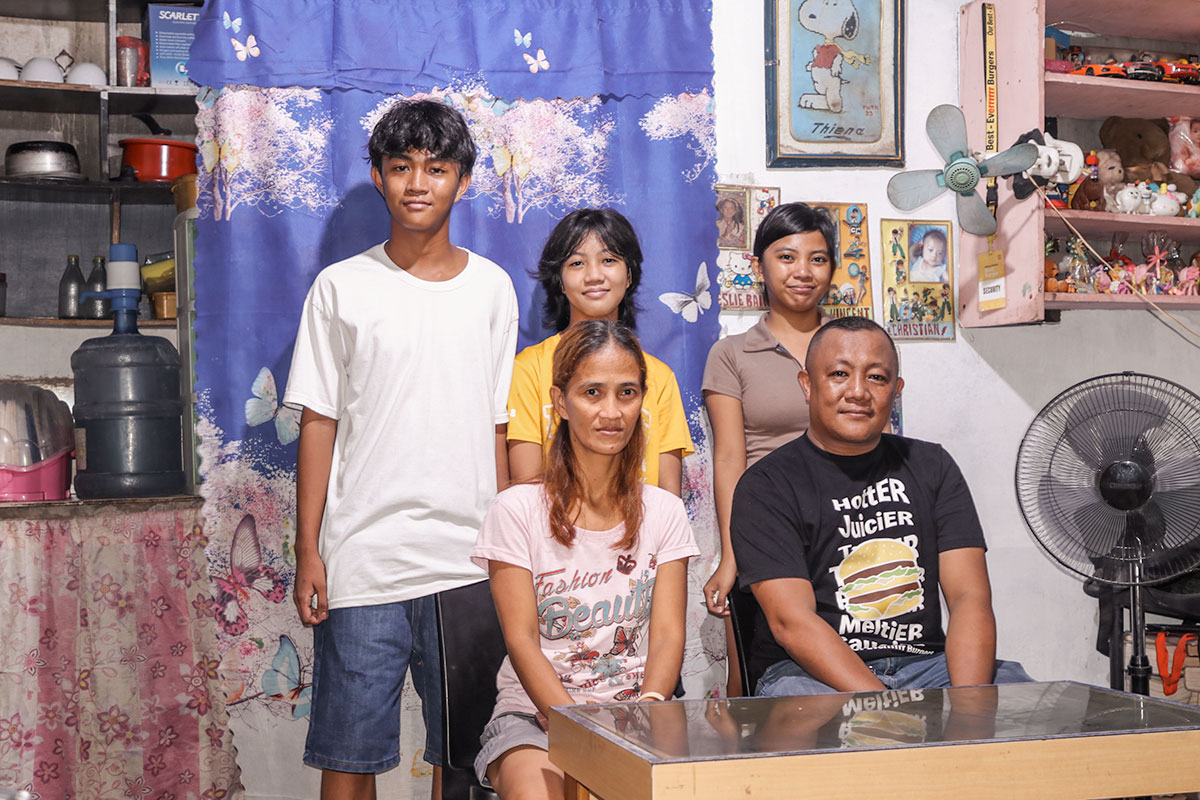
Rowena is determined to work hard to continue achieving her family’s goals so that her children can focus on getting good educations.
Learn more about the impact of Poverty Stoplight on families in Unbound’s programs around the world. See how a mother and son in Guatemala built their first home with guidance from Poverty Stoplight in “Peace in a tiny home.”
A New Chapter for Nazario
Discover the inspiring journey of Nazario, an 83-year-old Unbound-sponsored elder from Guatemala. Despite facing challenges, Nazario’s resilience shines as he finds hope and connection through support from Unbound. Join us in exploring the powerful transformation in Nazario’s life and learn how you can make a difference for elders like him. Watch now and be inspired by the strength of community and compassion in changing lives through Unbound elder sponsorship.
Nazario, an 83-year-old grandfather, can continue the craft that he loves — basket weaving — with the support and renewed hope he finds through elder sponsorship.
Irma’s Journey to Education
Irma lives in a rural mountainside community in Sololá, Guatemala, where most girls leave school by the 6th grade to care for their families or to be married. Not Irma, however. Irma defies the odds and goes the distance to pursue her dream of becoming a doctor. She attends school even when the only way to get there is by a 25-minute, treacherous bike ride. Irma’s story serves as a reminder of how sponsorship can be the spark that ignites the fire within a child living in poverty to do everything she needs to reach her full potential.
Watch “Irma’s Path” to get an inside look at her daily life, and give someone else like Irma the chance for an education when you sponsor a child today.
To reach her dream of an education, a 12-year-old girl journeys by bicycle over rough terrain to school each day.
A path to economic self-sufficiency
When Jean Claude’s youngest daughter was sponsored through Unbound a few years ago, he could finally visualize his family’s path toward a future free of poverty and began working to secure it. Experience the profound impact of Unbound sponsorship on Jean Claude and his family. Utilizing support they’ve received from Unbound, they have turned their farm into a sustainable livelihood, expanding their crops and securing a brighter future. Witness their inspiring transformation and discover the lasting ripple effects of community empowerment. Join us in celebrating the power of sponsorship to create meaningful change in the lives of families like Jean Claude’s.
Watch the video to see how sponsorship has empowered Jean Claude and his family in a short amount of time to work toward and achieve their goals.
Creating Their Own Destinies
For millions of women living in poverty in India, education is an elusive dream. And for many of the mothers of newly sponsored children, they’ve decided to focus on the education of their children, putting aside their own dreams for an education. The staff of Unbound Telangana heard these women’s silent wishes while witnessing their knowledge, skills and strengths. Inspired by the conviction that empowered mothers are a force for positive change, Unbound created a new scholarship program for mothers with sponsored children in Unbound’s Telangana program. Now, these women’s dreams, as well as those of their children, are becoming a reality.
Read more
Creating their own destinies
New scholarship program gives Telangana mothers the opportunity for an education
By Kati Burns Mallows
For millions of women living in poverty in India, education is an elusive dream.
For Ather, a 38-year-old single mother living in the state of Telangana, her dream to become a nurse had been present from a young age, like an apparition in the back of her mind that more solidly materialized throughout the seasons of her life, briefly haunting her with visions of what could have been.
The dream was there when she had to drop out of school at age 14 to help tend to her siblings.
It was there a few years later when she got married.
And yet again, it was there as she stumbled under the weight of the responsibility that came with trying to support four children on one meager income.
So, Ather set aside her dream to dream instead for her children.
She focused on fighting to ensure they would have access to the education that she never did — so that they would not have to know what it’s like to live with the heartache of a dream never realized.
That was more than six years ago.
Today, Ather is enrolled in the 10th grade, intent on making up the schooling she missed as a child, and her own dreams are once again at the forefront.
“It is very important to me to get educated because this will be [the] key to my dreams,” Ather said. “I aspire to be a nurse in five years, and to show the world what I can do.”
Thanks to the support of a new scholarship program for mothers in Unbound’s Telangana program, Ather’s once elusive dream — and the dreams of many other Indian mothers like her — is becoming reality.
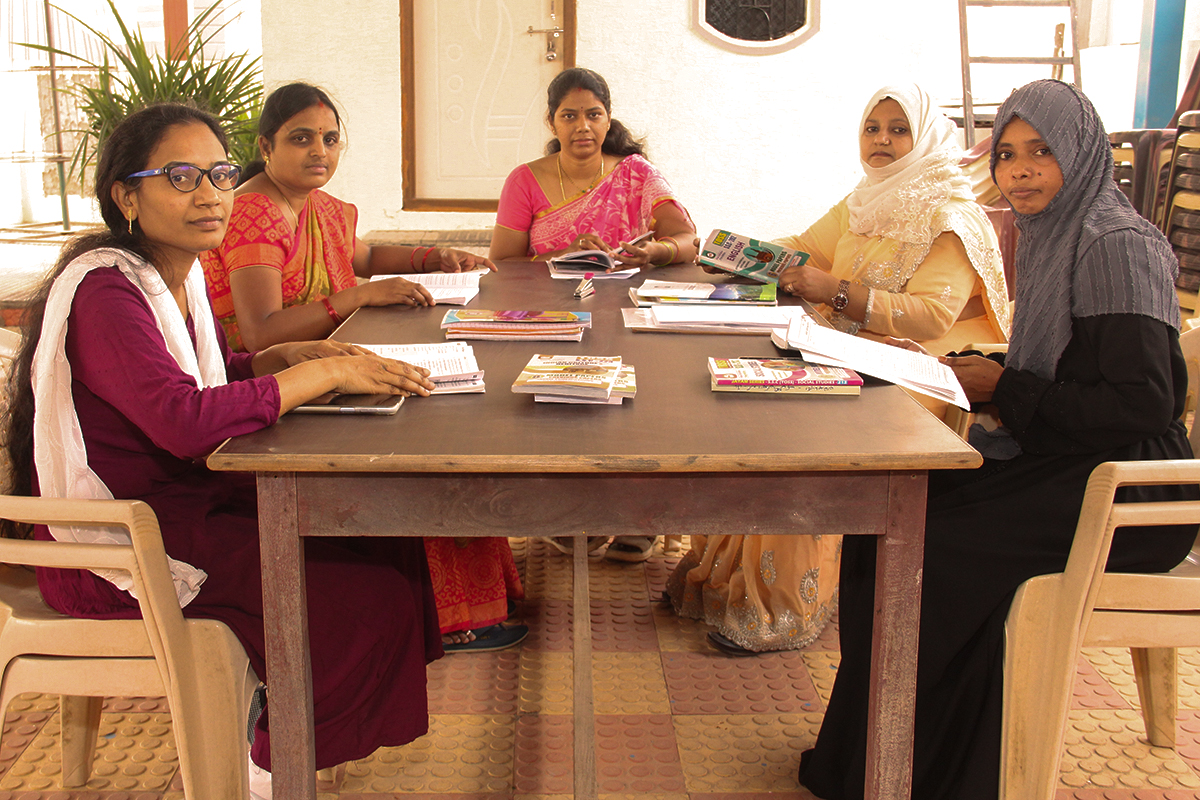
Ather (pictured second from right in cream-colored saree) studies with other mother scholars enrolled in the Unbound Telangana program’s new scholarship program for the mothers of sponsored children in India. Other mother scholars pictured are (left to right) Laxmi, Sravanthi, Devi and Meharunnissa.
Why a scholarship program for mothers in India is necessary
Since the Right to Education Act (RTE) was signed into law in India more than 14 years ago, granting free and compulsory education for all children between the ages of 6 and 14, the country has made great strides in improving access to quality education and increasing school enrollments.
However, educational disparities between men and women are still present today. The literacy rates in Indian women lag behind that of men, with 69% of women literate in 2022 compared with 83% literacy in men. Though the reasons for this are complex and varied, many women end their educations early to help their families with housework, look after siblings or get married.
In Unbound’s Telangana program, these were some of the main reasons for educational disparity staff members heard about from the mothers of newly sponsored children.
Saritha Mendanha, coordinator of Unbound Telangana, said the voices of many mothers were thinly underlined with a deep regret for not being able, against their own wishes, to complete their studies.
“I could hear their silent, ‘I wish …’ with a sigh of sadness and helplessness,” said Mendanha, who has been serving Unbound families in Telangana for 15 years.
“We heard their stories for years, witnessed their knowledge, skills and strengths despite not having formal educations. Their messages were clear — all they were waiting for was the opportunity to fulfill their dreams.”
So, in 2022, in answer to mothers’ grievances, Unbound Telangana staff created a scholarship program just for the mothers of sponsored children.
It isn’t the first time that local staff have worked to create a solution to the issue of women’s inequality. Many of the staff, Mendanha included, grew up in similar environments as the mothers they now work with. In fact, it was in India more than two decades ago that Unbound established its first mothers groups.
The organization’s program model has long supported the conviction that empowered mothers are a force of positive change for their families, communities and in their own lives. In fact, Unbound research has shown that 90% of mothers with sponsored children believe that — with the right support system in place — they have the power to change the lives of their families.
In addition, education has widely been considered as a milestone for women’s empowerment because it equips women and girls to confront traditional roles, change their statuses within both their families and in society, and motivate their own children.
It was to this end that Telangana staff introduced the scholarship program to its first mother scholars, aptly calling it the “Kalala Sakaram Scholarship Program.”
In the Telugu language, “Kalala Sakaram” means “dream come true.”
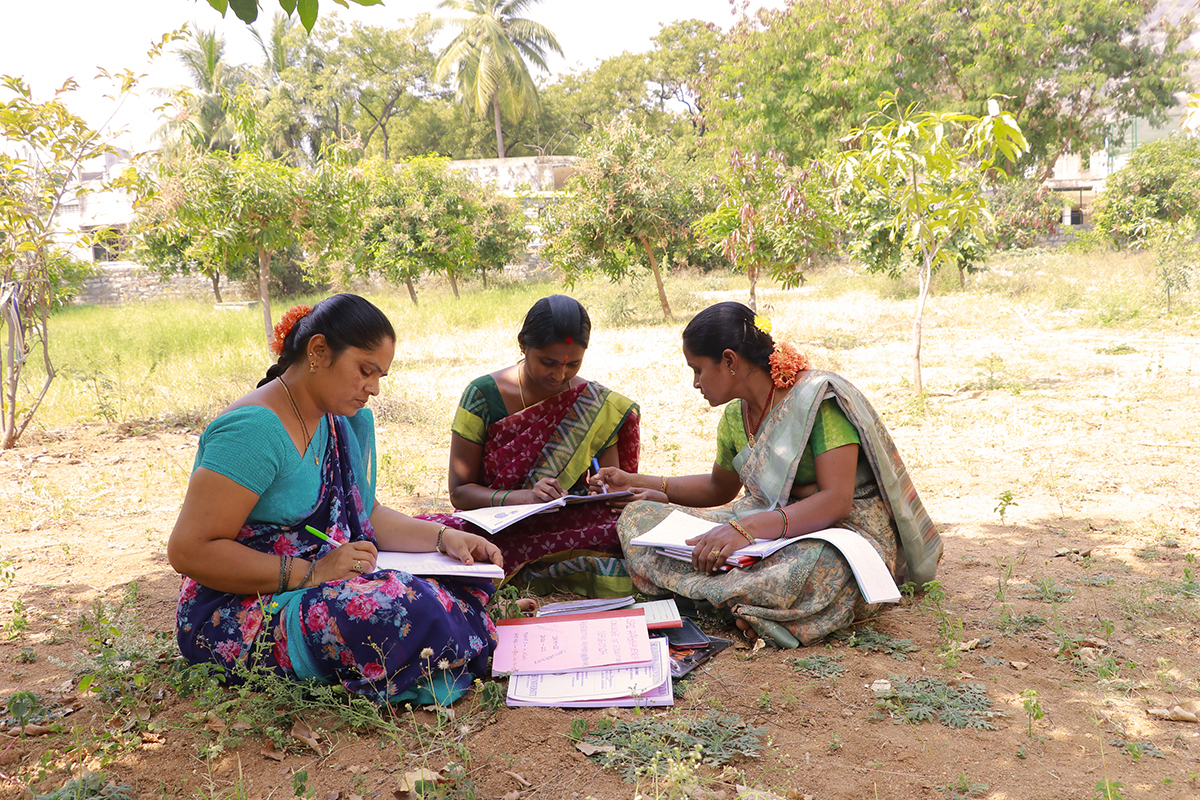
From left to right, Kalala Sakaram Scholarship Program mother scholars Karingu, Nirmala and Sandhya study together near Unbound’s Telangana program office in India.
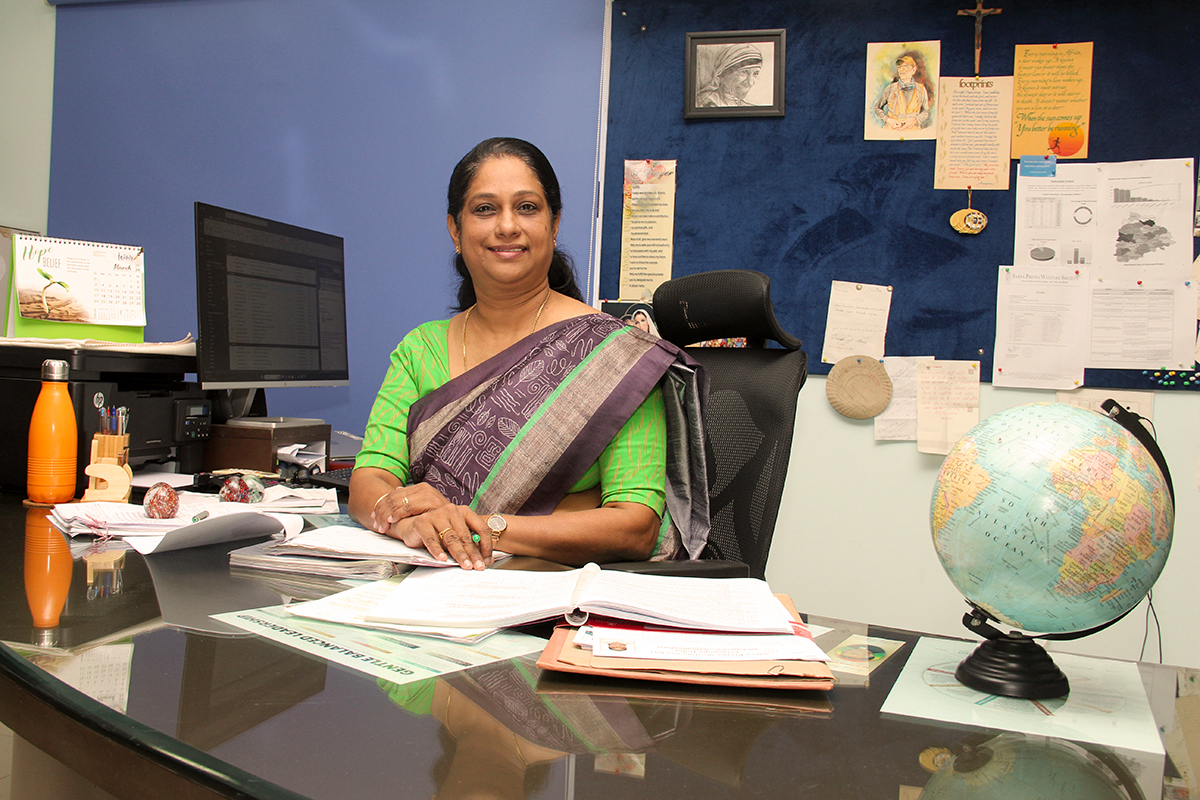
Unbound Telangana coordinator Saritha Mendanha has been working with Unbound families for 15 years and believes the Kalala Sakaram Scholarship Program for mothers will help fill the gap in women’s education.
How the scholarship program for mothers works
Mendanha describes the Kalala Sakaram Scholarship Program as “giving wings to the dreams” of mothers.
So far, 42 mothers are scholars under the new program — 39 are the mothers of currently sponsored children, while three are the mothers of previously sponsored children. Nine of the mother scholars are single mothers.
The Telangana scholarship program for mothers is modeled after the Unbound Scholarship Program that has been in existence since 1998, providing tuition assistance and other study-related costs to promising sponsored or non-sponsored youth for secondary school, vocational training or higher education.
Mothers of current sponsored children and mothers of children who have retired from the program in the last two years are eligible to apply for the Kalala Sakaram Scholarship Program in Telangana as long as they demonstrate a strong focus in goal orientation, one of Unbound’s key program characteristics.
Unlike in the youth scholarship program, mothers in Kalala Sakaram are not required to complete community service hours, and they are given up to two years’ time to obtain passing grades in a course as they learn to adjust their work-life balance to accommodate their studies.
“To be eligible, at a minimum, mothers must have a clear personal goal and a realistic plan to achieve that goal,” Mendanha explained.
Some mothers needed to begin their educational journeys at the basic level, enrolling to complete 10th- or 12th-grade courses in open schooling in Telangana, while other mothers were ready at the outset to pursue higher education or professional studies.
According to Mendanha, the program does not solely aim to increase mothers’ employability in the workforce but is meant to act as encouragement to them to take that next step in their educational journey, to stand alongside their family and community with dignity and lead by example.
“We encourage by reminding them that ‘decisions make destiny’ — with this one decision, they are creating their own destiny,” Mendanha said.
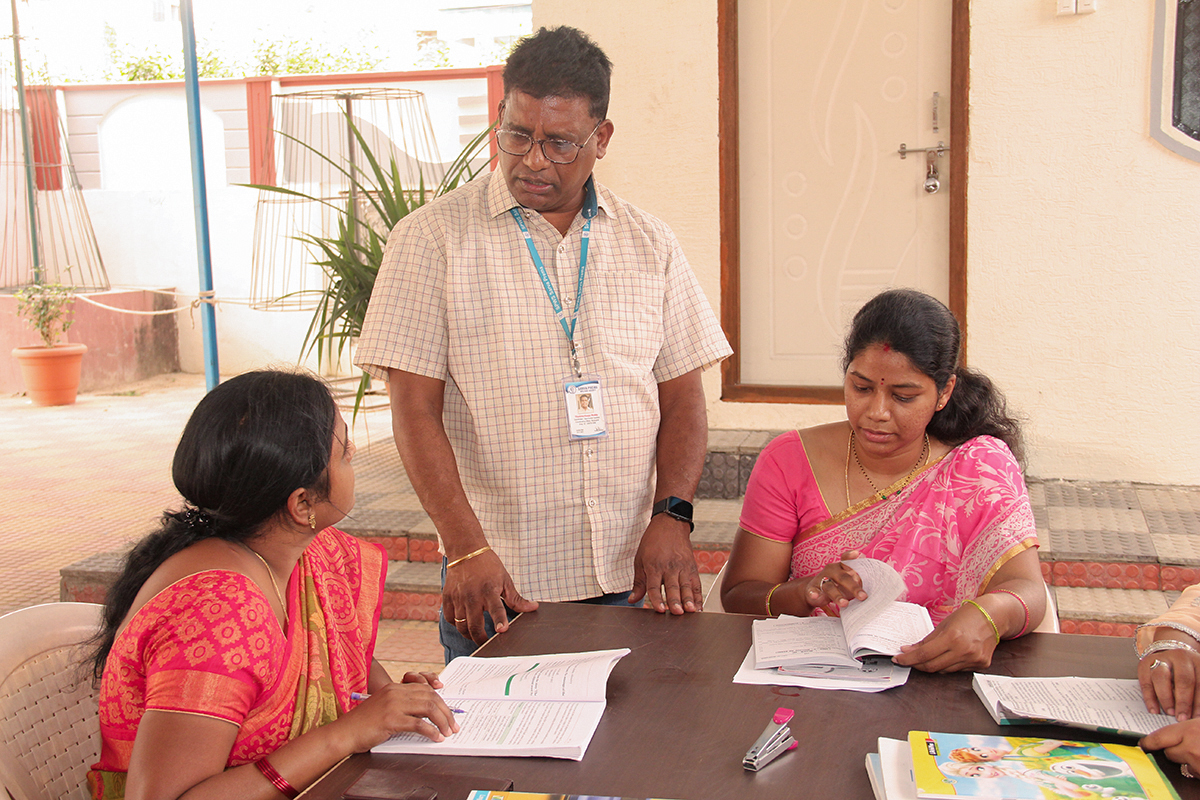
Unbound Telangana program staff member Kaspa Reddy Thumma guides mother scholars Sravanthi (left) and Devi through their study lessons at the Telangana program office in India.
Mothers join their children in creating their own destinies with the scholarship program
Anitha’s goal — and the destiny she is creating for herself — is to become a lawyer.
With the help of the Kalala Sakaram Scholarship Program, the 39-year-old mother of two is in her third year of study, pursuing a degree in law, which she hopes to obtain in 2026.
She arises at 4 a.m. each day to devote two hours to her studies before beginning her household chores.
“My main intention to complete this course is to fight for women’s rights and humanitarian rights in the courts of law,” Anitha said.
Anitha grew up with seven siblings in an Indigenous tribe, and her family moved frequently. That alone would have made consistent education difficult, but she said she also had to contend with the fact that her mother believed education was unnecessary for her children.
Anitha has witnessed the power of education and the doors it can open for her own family. Her daughter, Erra, is a graduate of Unbound’s sponsorship and scholarship programs and now works for Unbound’s Telangana program as a social worker. With the support of Unbound, Erra was able to earn a college degree, something that Anitha takes pride in and was inspired by. Erra was the one who encouraged her mother to enroll in the Kalala Sakaram Scholarship Program.
“Only with education can one reach any status of life,” Anitha said.
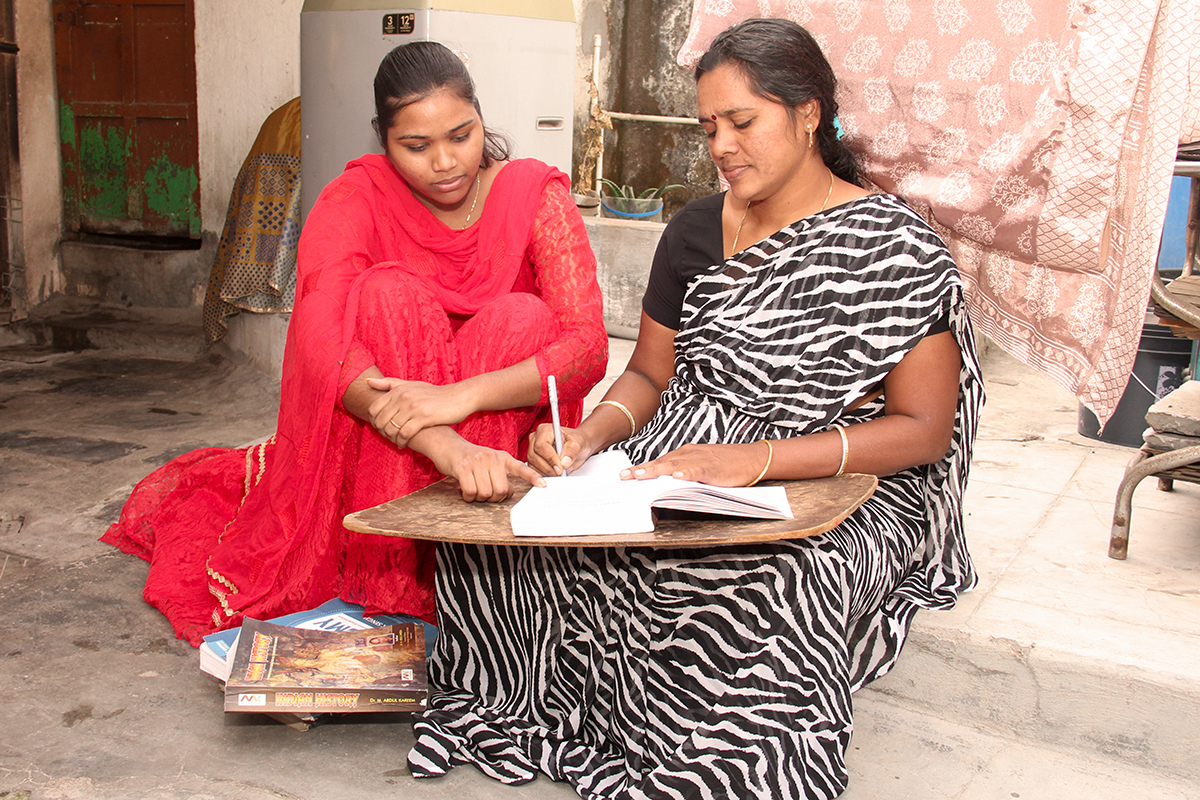
Outside their home in Telangana, India, former Unbound sponsored child and scholarship recipient, 24, helps her mother, Anitha, learn the English language. Through Unbound’s youth scholarship program, Erra earned a bachelor of science in agriculture and now works as a social worker for Unbound Telangana.
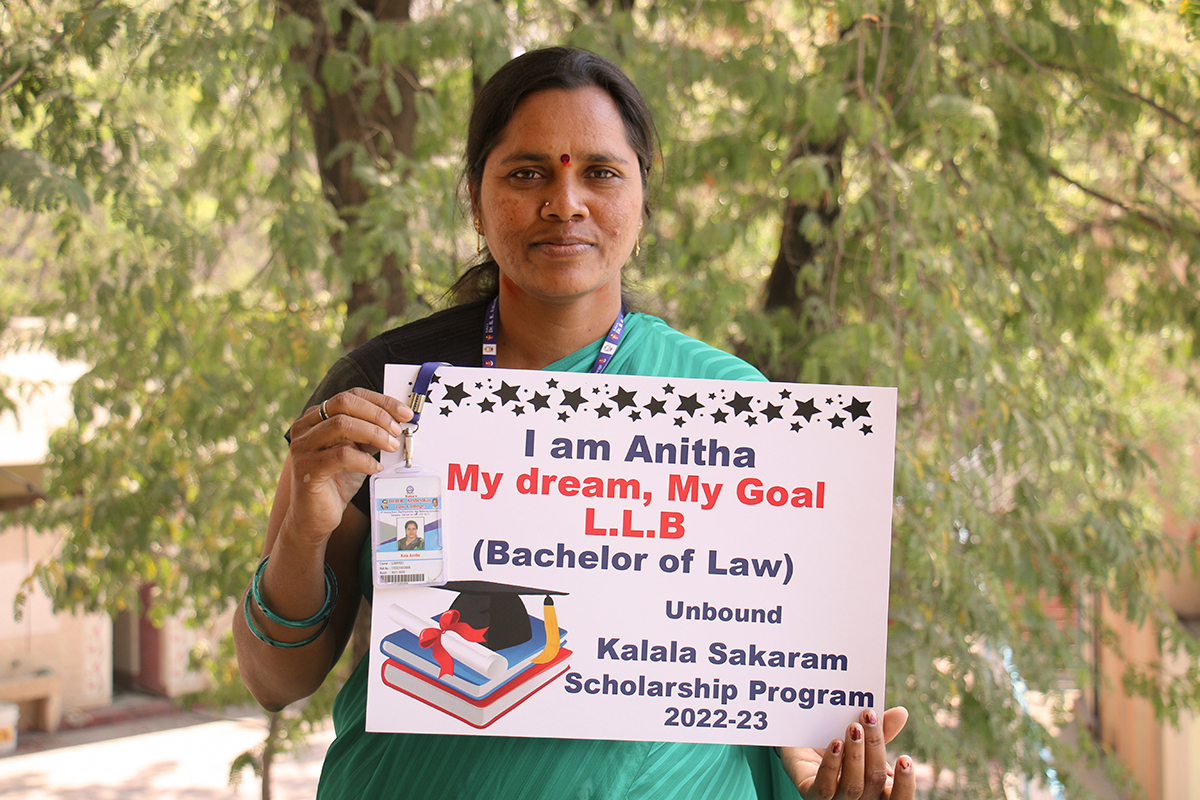
With the encouragement of her daughter, Anitha enrolled in the scholarship program for mothers and is in her third year studying to earn a degree in law.
Four mothers who are scholars in Kalala Sakaram are studying alongside their children who are currently enrolled as youth scholars in the Unbound Scholarship Program.
Bala, 35, and her daughter Sreeja, 17, are two such individuals enrolled in the scholarship program. Bala works as an assistant in a government hospital, helping nurses as they treat patients, cleaning the hospital premises and organizing storage rooms — but she aspires to be a nurse.
Bala was once a sponsored child of Unbound but left the program in her mid-teens after the passing of her father left her mother struggling financially.
“My mother decided to get me married,” said Bala. “I had a dream to study well but because of that, I could not continue my studies. With Unbound again now, I can continue my studies.”
Though schooling on top of her job and household chores makes for early mornings and late nights, Bala is proud she gets to study alongside Sreeja. They help each other with their studies for two hours each night after dinner.
Through Kalala Sakaram, Bala has completed professional training as a multi-purpose health worker and is now studying general nursing at the university on weekends. Her goal is to graduate in 2027. With a degree in nursing, she’ll finally be able to qualify for a permanent nursing position at the government hospital.
“I want to serve the poor, those who suffer from health issues,” Bala said. “With Kalala Sakaram program, I am entering into a respectful life. I will be identified as a qualified nurse and gain respect in the society, family and in the workplace. With my family by my side, I feel so happy and strong.”
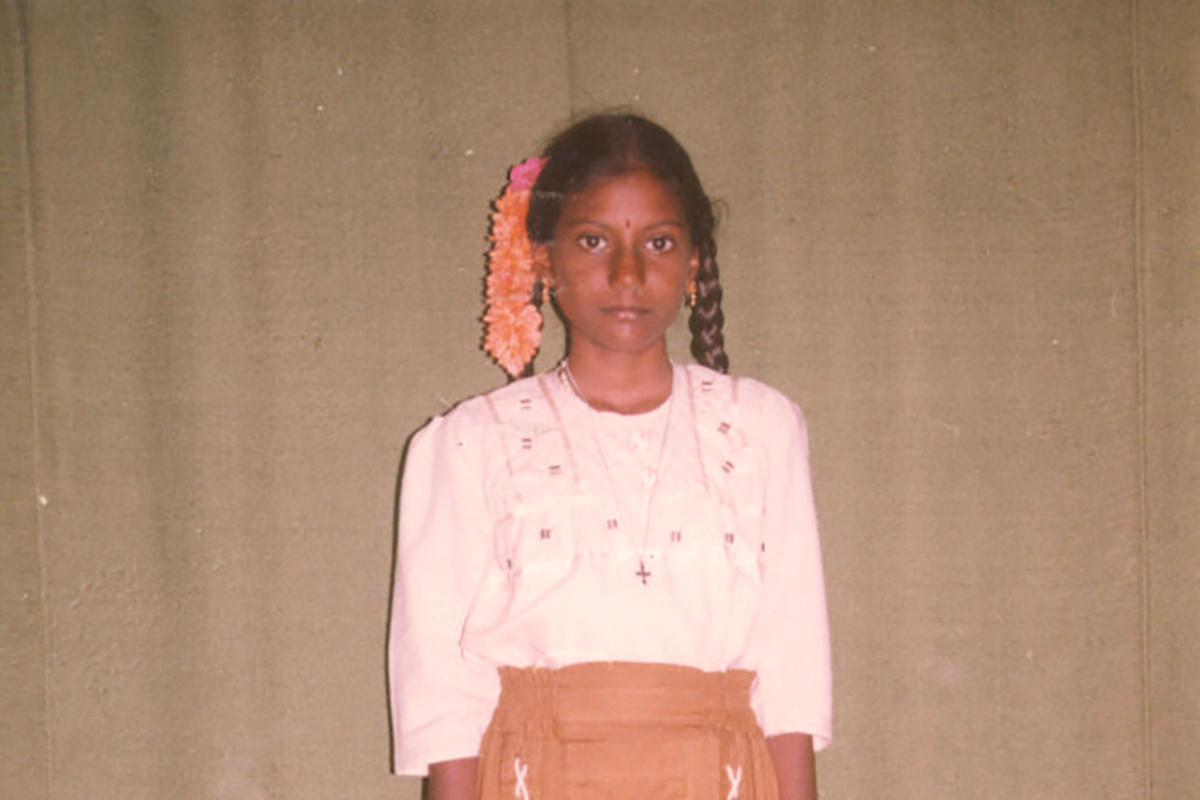
Bala, pictured at age 12, was an Unbound sponsored child between 1996 and 2006 but left the program after the death of her father. Photo from the Unbound archives.
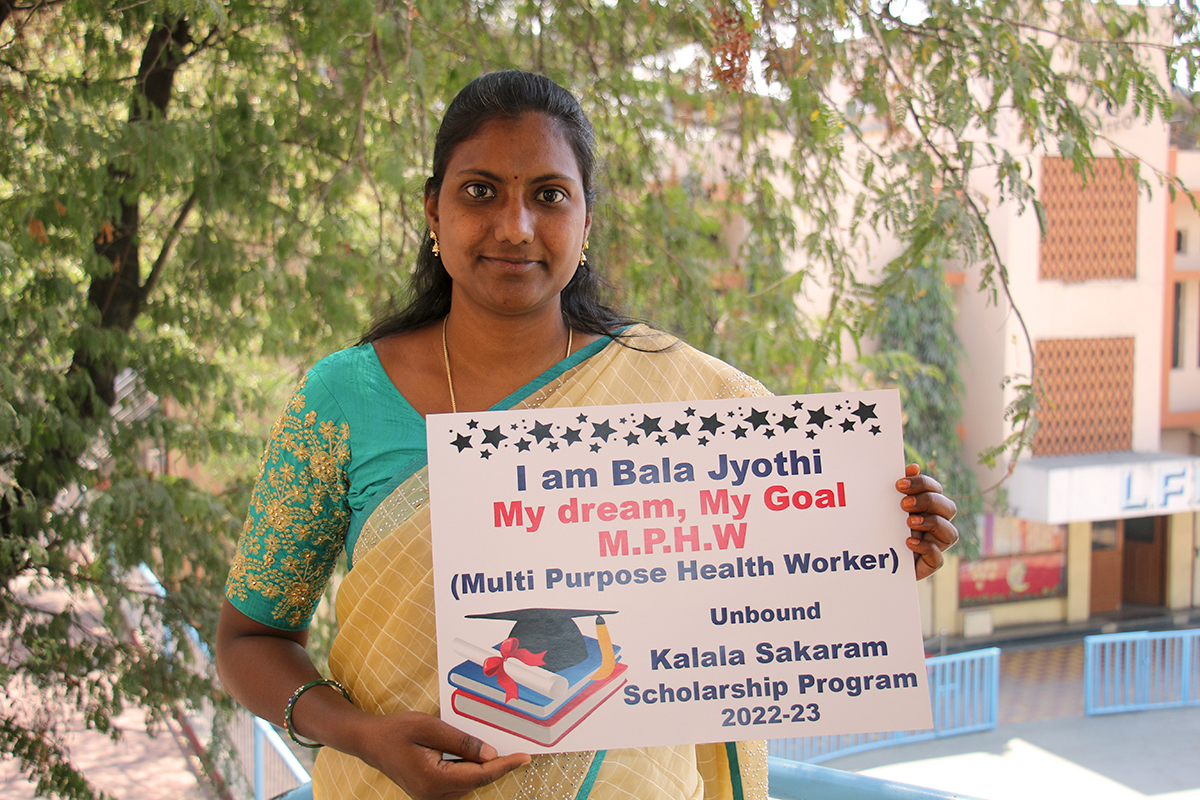
Bala today, at age 35, a mother scholar in Unbound Telangana program’s “Kalala Sakaram Scholarship Program,” which is helping her further her education in the field of nursing.
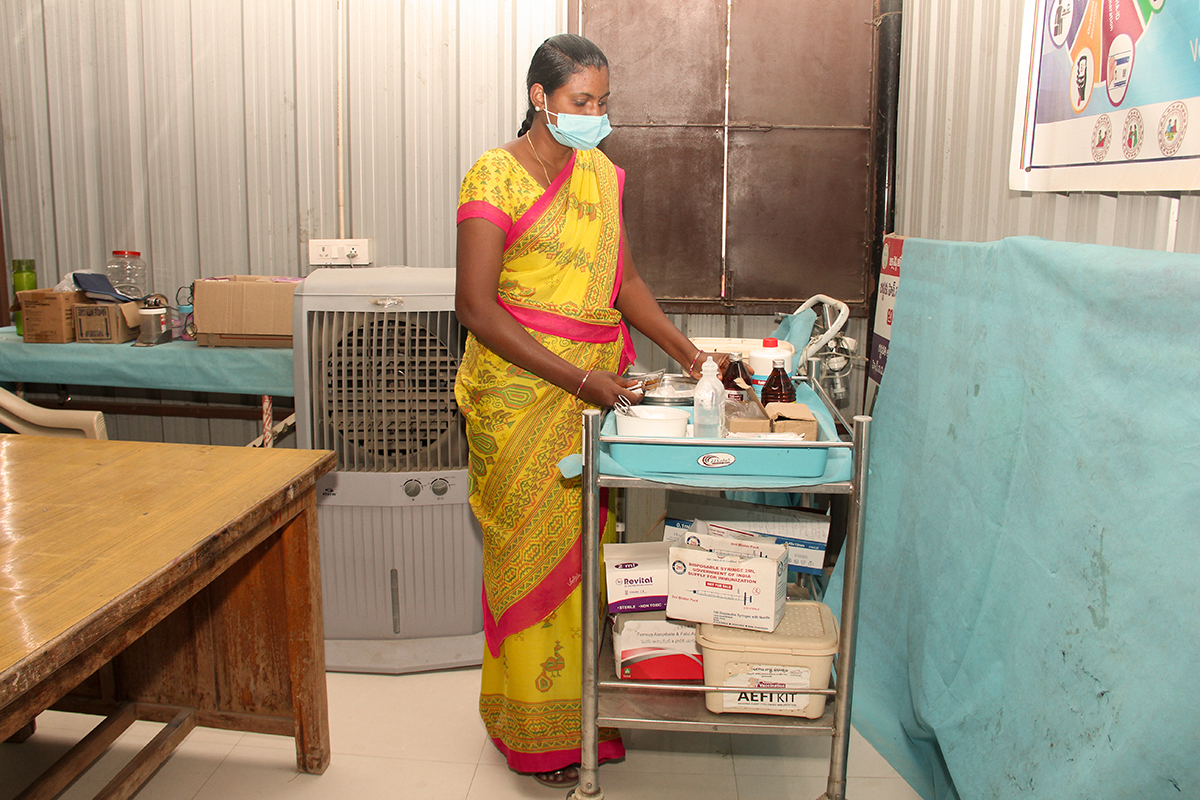
Bala currently works as an assistant in a government hospital in India but hopes to receive a promotion to nurse once she completes her studies in 2027.
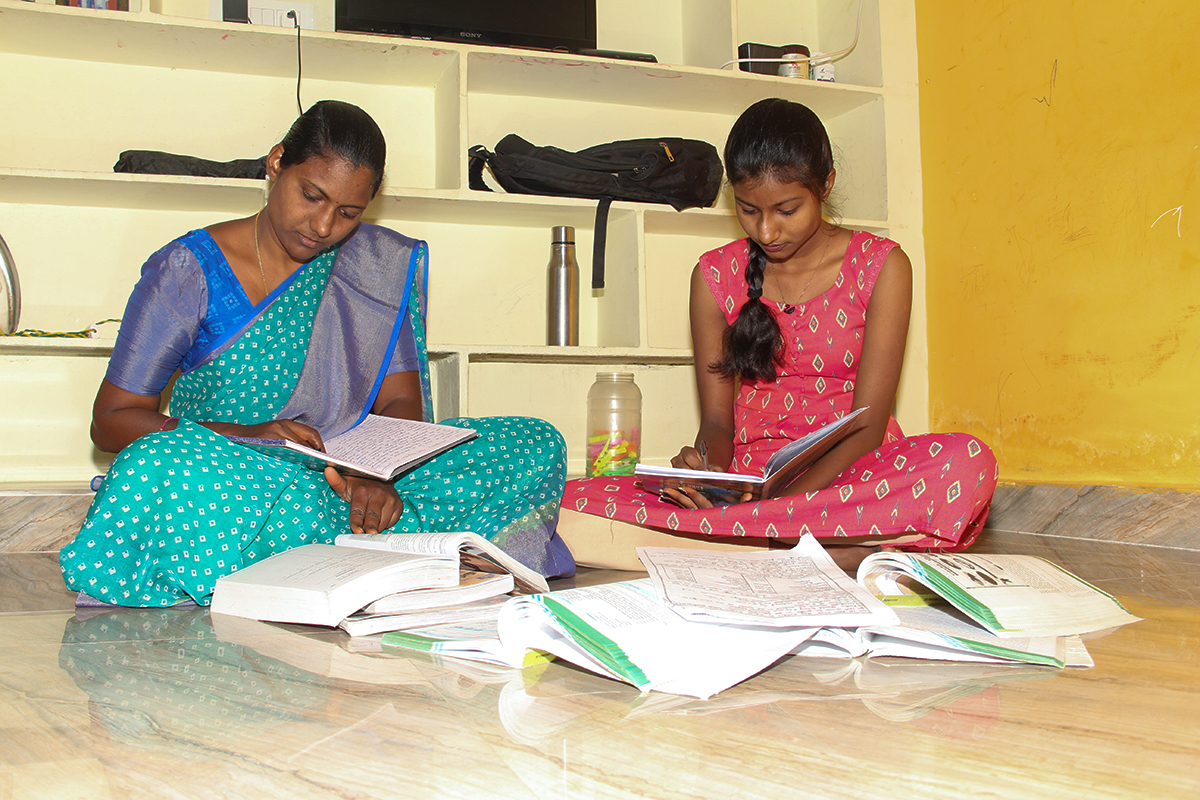
Bala studies nightly alongside her eldest daughter, Sreeja, 17, at their home in India. Sreeja is both a sponsored child and a participant of the Unbound Scholarship Program.
Devi, the mother of 15-year-old sponsored child Shanmukha, also feels the support of her family as she completes her second year of study for a bachelor’s degree in commerce. She studies for exams alongside Shanmukha, and they quiz each other when their subject matter aligns.
Devi, 34, had once dreamed of being a math teacher, but as a youth was only able to complete schooling up to the 11th grade. Though many women in her neighborhood work in factories or as domestic workers or tailors, Devi and her husband were both lucky to find jobs in sales.
Thanks to Kalala Sakaram, with the completion of her bachelor’s degree in one more year, for the first time in her life, Devi will qualify for a promotion at work and a higher salary.
We heard [the mothers’] stories for years, witnessed their knowledge, skills and strengths despite not having formal educations. Their messages were clear — all they were waiting for was the opportunity to fulfil their dreams.— Saritha Mendanha, Coordinator, Unbound Telangana program in India
Helping close the gap on women’s education in India
Since the Kalala Sakaram Scholarship Program launched in 2022, it has served to remind Mendanha that higher education for women is one of the most overlooked means for ending poverty among families. She’s inspired daily by the personal sacrifices, strength, determination and resilience of the mother scholars on their quest to create their own destinies, born of an opportunity they once thought they would never have again.
Thus far, seven mother scholars have fully completed their educations. Two mothers have completed professional courses in general nursing, midwifery and multi-purpose health worker training and are enrolled in college this year. One mother scholar completed pre-primary teacher training, while another earned a master’s degree in library science.
The successes of these first mother scholars of the Kalala Sakaram Scholarship Program have inspired other mothers in Unbound Telangana and their non-sponsored neighbors and friends in their communities.
“It is our hope that our mother scholars and the staff can pave the way for more [mothers] to join [the scholarship program] by helping them eliminate the reasons that are standing between them and their dream of gaining an education,” Mendanha said.
Through the support of Kalala Sakaram, Mendanha believes the mothers of sponsored children will find the confidence they need to take ownership of their development and to eventually lead, not only their families, but their communities toward greater equity and prosperity.
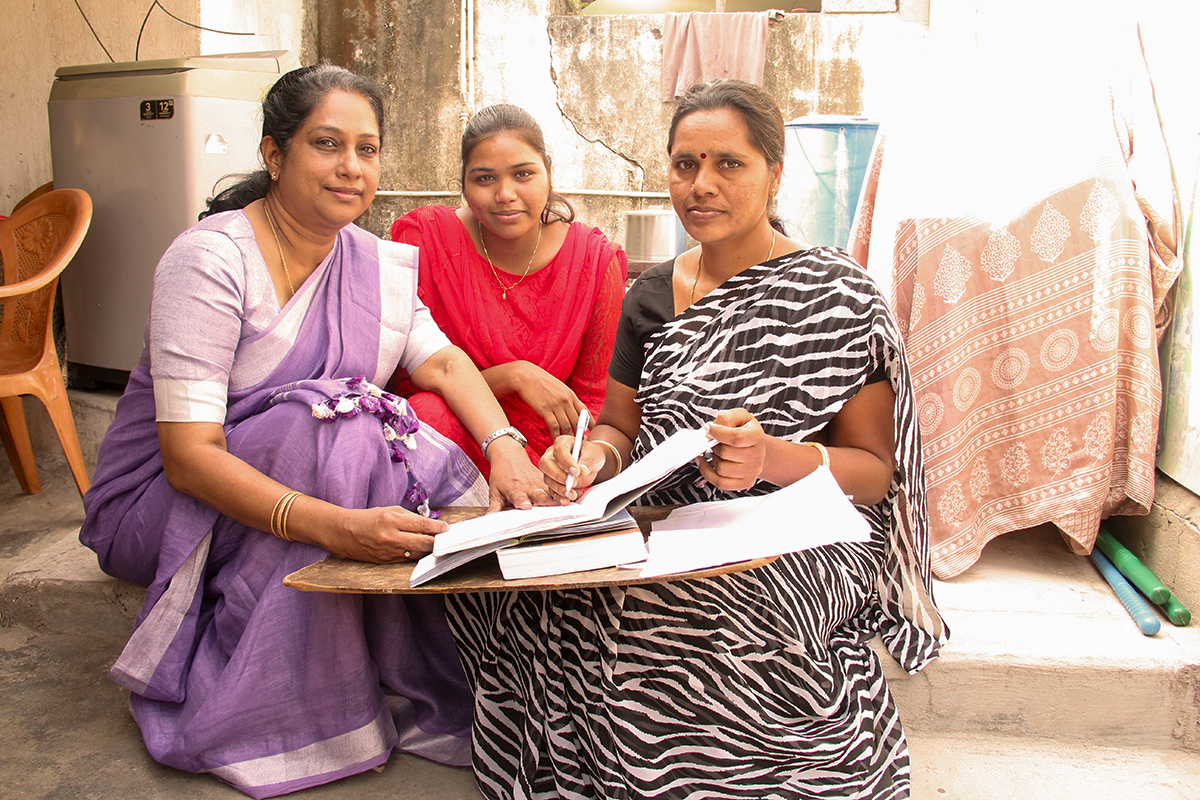
Unbound Telangana project staff Saritha Mendanha (left) and Erra (middle) check in with mother scholar Anitha at her home in India. Anitha, who is Erra’s mother, dreams of earning her law degree so that she can fight for women’s rights in India.
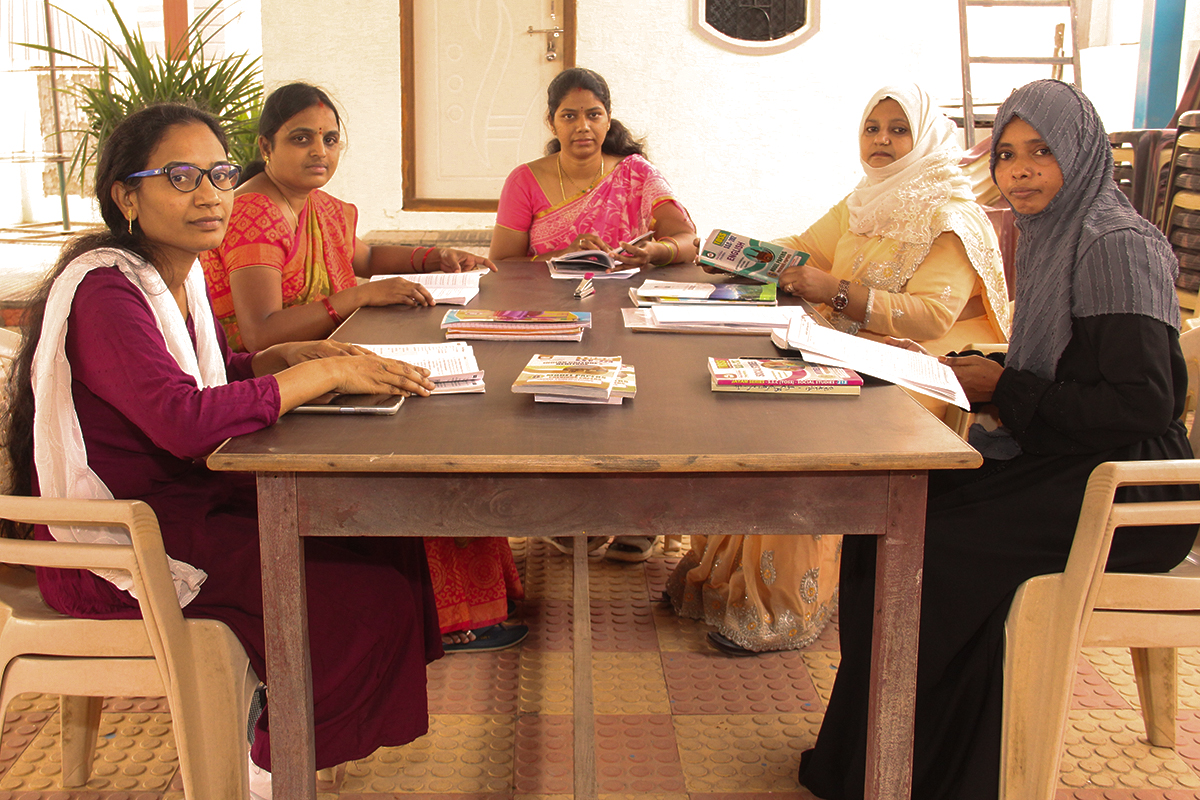
Mother scholars enrolled in the Unbound Telangana program’s new scholarship program for the mothers of sponsored children in India. From left to right, Laxmi, Sravanthi, Devi, Ather and Meharunnissa.
Bright and Eager
Bibeth is a bright, inquisitive 10-year-old sponsored girl from Kigali, Rwanda, with a passion for learning. Bibeth’s mother, Chantal, was a teenager when her daughter was born. Determined to graduate, Chantal returned to high school, taking her baby with her to classes, and earned her diploma. Today, she has instilled in Bibeth this same desire to learn. Education is such a priority in Bibeth’s home that, prior to her being sponsored, her parents made the sacrifice of being apart from her so she could go to a good school. But now, with sponsorship funds helping ease their financial burden, Bibeth is reunited with her parents and younger brother, Nolan. She’s also enrolled at a closer school, one with a higher academic standing, more suited to her abilities.
Read more
Bright and Eager
A young girl in Rwanda reflects the love of learning instilled by her parents
By Larry Livingston
Bibeth has a system for deciding whether to read a book.
“I … read the first page,” she said. “If I see that it is so interesting, and I can find important things, I go there and see it and read that book.”
Apparently, she finds the first page interesting quite often because this bright, inquisitive 10-year-old sponsored child from Kigali, Rwanda, has become a voracious reader with a passion for learning.
Reading is an oasis for Bibeth. She loves stories with morals, like the one about Nyantagambirwa, the greedy man, and the one about Sarah, the little girl whose singing brought joy to her village. She enjoys telling visitors about books she’s read.
“[Reading] makes me so happy, and there are some books that give me lessons I must need in my life,” she said.
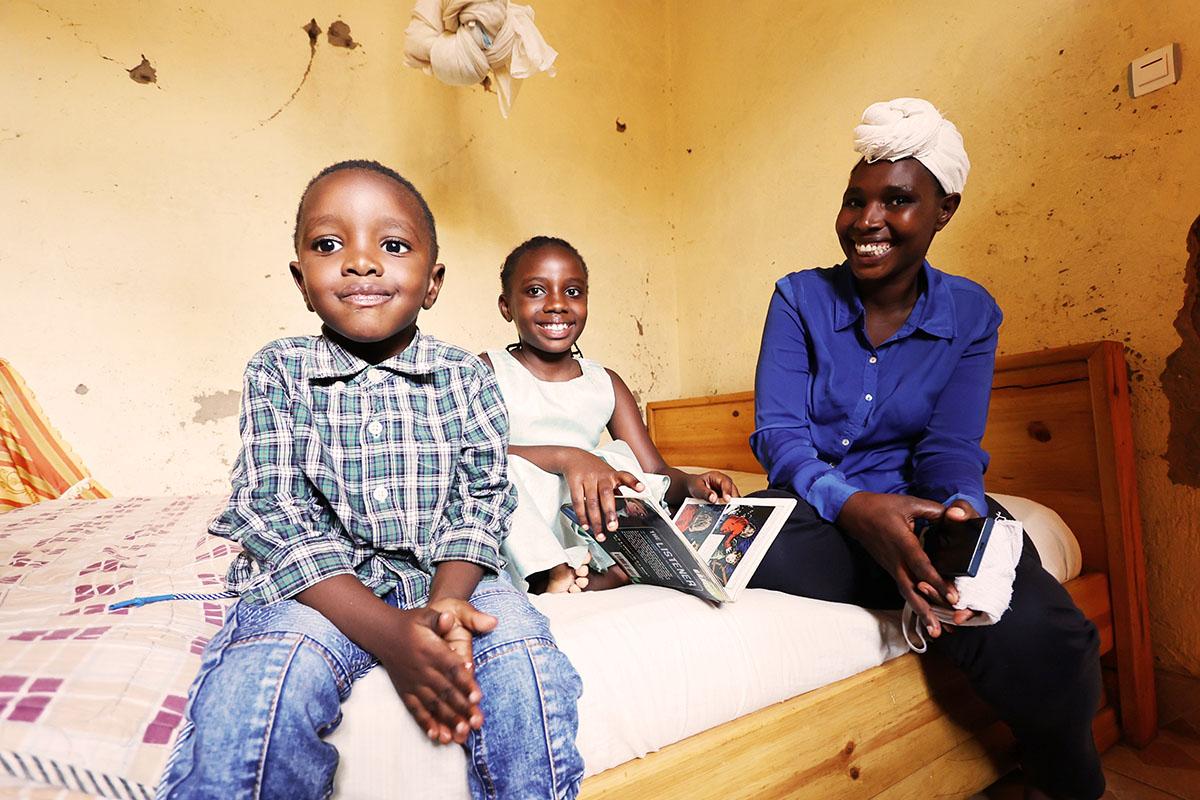
From left, 3-year-old Nolan, Bibeth and their mother, Chantal, share a happy moment in their home. Bibeth enjoys reading bedtime stories to her little brother.
She’s found her happy place
For a child who loves to read, a library is a special place. Bibeth is fortunate to have two that she can escape to. One is in her school.
“In break time, we go to ask our headmaster if we can go in the school library and read,” she said. “[He gives us] a key and we go there and read. When they ring [the bell], we go back in the class.”
The other is the Kigali Public Library, which Bibeth’s family discovered while they were looking for a bookstore. They were discouraged at how expensive books were and decided instead to use some of Bibeth’s sponsorship money to purchase an annual subscription to the library.
“… I felt happy when I paid that money because she [gets good use out of it],” her father, Joseph, said. “She really likes to read books. That makes me happy. I didn’t get any opportunity in my childhood to read any books. … So, when I see my daughter is reading, it makes me proud of her.”
Bibeth goes with her mother, Chantal, to the library a few times every month. She is allowed to bring home five books. She always returns them well before they’re due.
“Oh, they give me three weeks, but me, I can read them in two or one,” Bibeth said.
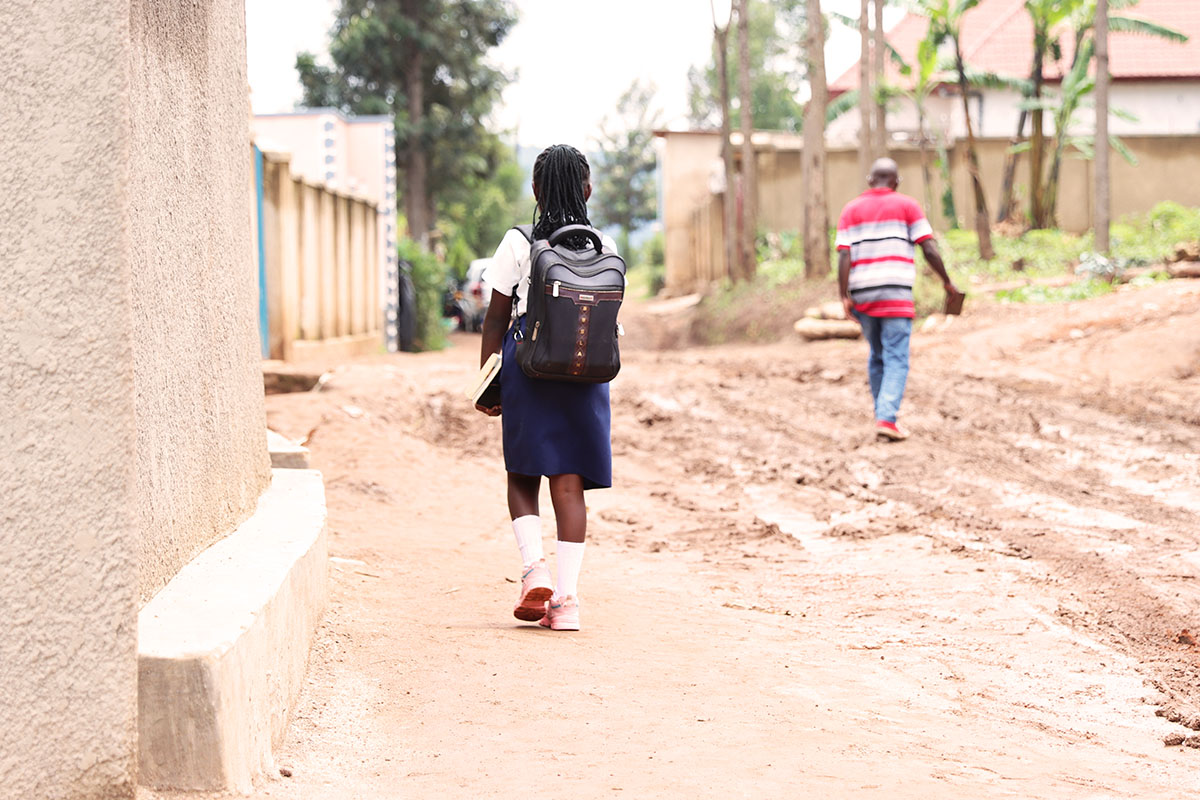
Like most children in her community, Bibeth walks to school. School buses aren’t available, and other forms of transportation are often too expensive for families.
Absorbing knowledge
For children sponsored through Unbound, education is one of the principal benefits. All children in the program are required to be enrolled in either formal academic education or vocational training. The value the organization places on education is entirely in sync with the values of Bibeth’s parents.
Chantal was a teenager when her daughter was born. Determined to graduate, she returned to high school, taking her baby with her to classes, and earned her diploma. She wants Bibeth to have that same desire to learn.
Joseph wants that, too, especially since he believes his own education was lacking.
“My education was not good because I didn’t go to the good college or good primary school,” he said. “But I decided that … I will invest [in helping] my child to study because I know the value of studying.
“Every [parent’s] mind … goes to their children. I [envision] how my children will live, will study. I see them in good colleges, in good universities. What I didn’t get in my childhood, I see them getting — knowledge.”
Knowledge is something Bibeth eagerly absorbs. A bright, inquisitive student who hopes to become a doctor when she grows up, she is consistently at the top of her class and has reached an advanced level of speaking and reading English. The reading proficiency is no doubt bolstered by her love of books.
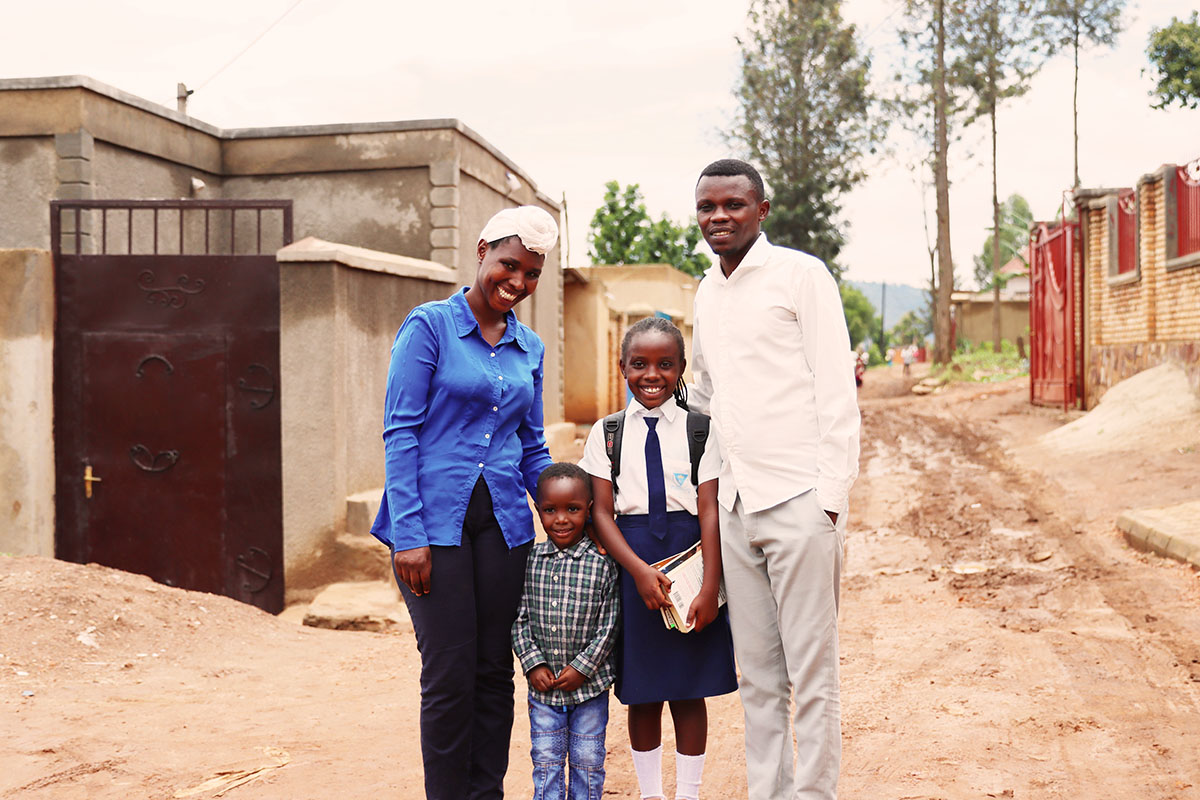
From left, Chantal, Nolan, Bibeth and Joseph enjoy being together. Before sponsorship, Bibeth lived with her grandparents in order to attend school, but now the family is reunited.
Strong, determined and loving
Education is such a priority in Bibeth’s home that prior to her being sponsored, her parents made the sacrifice of being apart from her so she could go to a good school.
“Bibeth was left at my parent’s house because the school she was attending was nearer to my parents than the place where we were staying,” Chantal said. “Affording transport fees every day for her to come to our place was also very hard for us during those days.”
But now, with sponsorship funds helping ease their financial burden, Bibeth is reunited with her parents and younger brother, Nolan. She’s also enrolled at a closer school, one with a higher academic standing more suited to her abilities.
Another benefit of the family being reunited is that Bibeth can draw daily inspiration from her parents’ example.
“My mom, she had me when she was [a teenager],” Bibeth said. “She was so young and people said, ‘Look at that woman.’ [But] she still was powerful. … She [would] still go to school.”
Bibeth also admires her father, who, up until the pandemic, coached at a local soccer academy but now earns a living doing electrical work. From him, Bibeth has learned to stand up to difficulties.
“… When you face a problem, [don’t] be so scared,” she said. “Be powerful. Say that I’m going to face it and live!”
Like other families in the Unbound program, Bibeth’s family doesn’t allow material poverty to define them. Her parents have instilled a sense of worth and confidence in their daughter.
“My family is not poor, is not rich,” Bibeth said. “I can’t explain it, but what I know is my family loves me, and I love them, too. When I am with my mom, dad and my family, I feel so happy!”
[Reading] makes me so happy, and there are some books that give me lessons I must need in my life.— Bibeth, Sponsored child in Rwanda
Henry Flores, Nickson Ateku, Danika Wolf, Erin Coleman and Oscar Tuch contributed photos and information for this story.
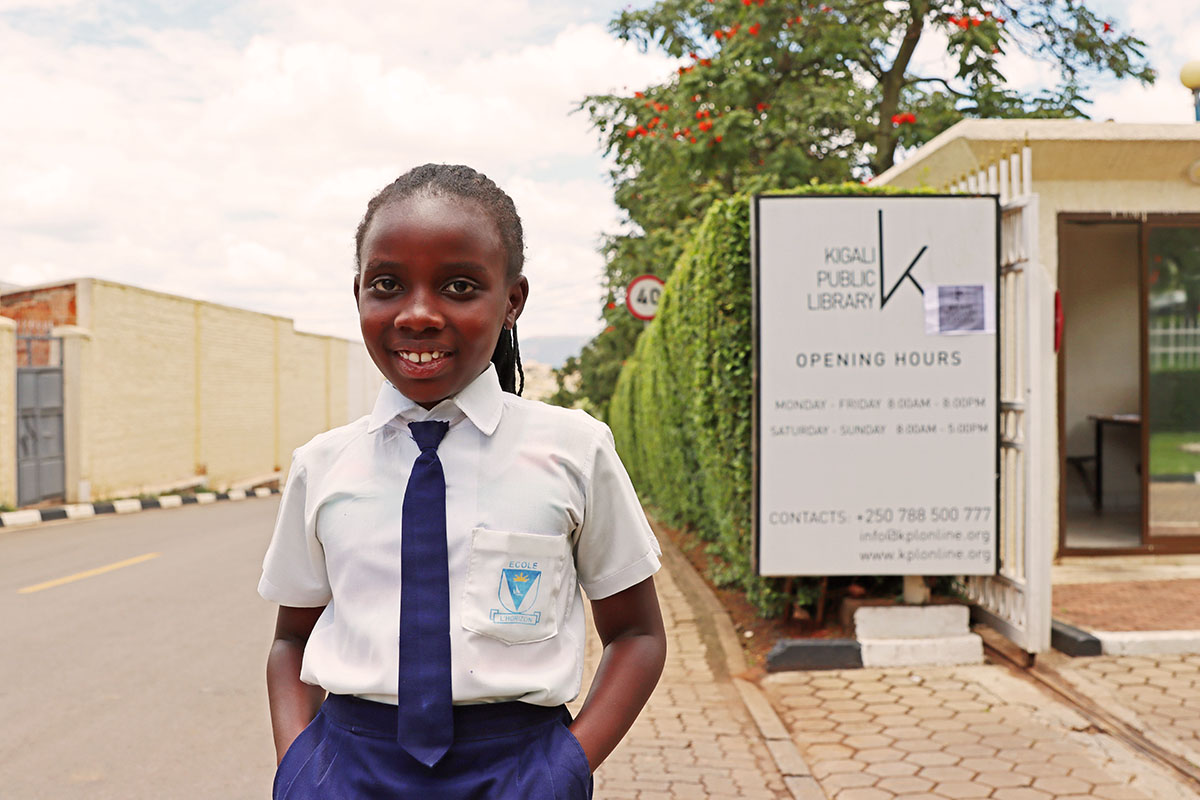
For a child who loves to read, a library is a special place. Bibeth is fortunate to have two places that she can escape to. One is in her school.
Finding her voice: leidy’s story
Leidy never imagined she would be a leader. But through her Unbound mothers group, named Esperanza de Vida (Hope for Life), she discovered the strength to speak up — and the power of helping others do the same. She says that her mothers group, “is giving our children hope to fulfill each of their dreams.” Hear from Leidy and see how community, connection and courage can change everything.
Stay Connected With Unbound
Do you want to receive exclusive email updates directly from Unbound?
Get direct and instant access to a member of our team who will share information about your impact, project outcomes and stories from the field.